

A three-beam, four-column hydraulic press is a general-purpose hydraulic press, also known as a universal hydraulic press. It is primarily used for processes such as stretching, flanging, bending, and stamping sheet metal parts. It can also be used for general pressing processes. So, for first-time buyers of a three-beam, four-column hydraulic press, what parameters should they be aware of?
As a company with decades of experience in hydraulic press production, Chengdu Zhengxi Intelligent Equipment Group Co., Ltd. provides customers with a clear overview of the key parameters of a three-beam, four-column hydraulic press. For example, the press’s nominal force, maximum opening height, maximum stroke, work surface size, return force, and press speed are all included.
1) Nominal force: This refers to the maximum working pressure of a three-beam, four-column hydraulic press. It is numerically equal to the product of the maximum fluid pressure and the total working area of the working plungers (rounded to an integer).
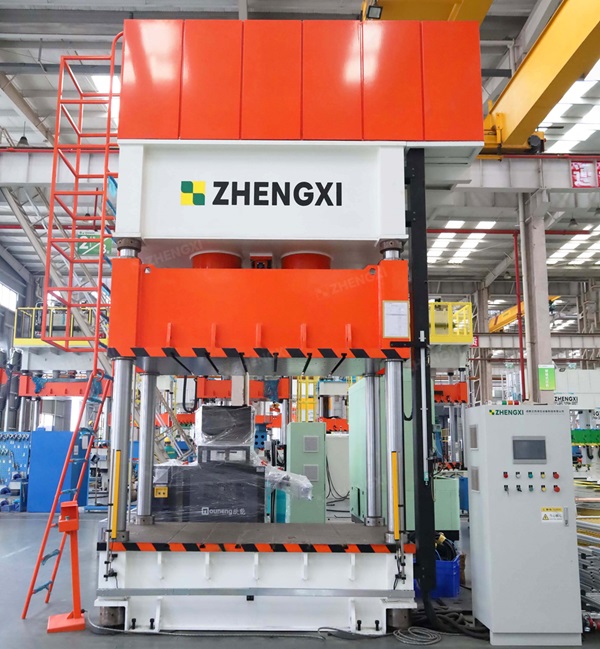
The concentrated loads borne by the equipment are subject to the load-bearing area limit. During design, calculations are generally based on an even distribution of the load across the center of the worktable, occupying 60% of the worktable area. Therefore, overloads or eccentricity will negatively impact the equipment. The only solution to these problems is to select equipment with a higher nominal force.
2) Maximum opening height (H): This refers to the distance from the upper surface of the worktable to the lower surface of the slide when the slide is at its upper limit. The maximum opening height should be determined based on the clearance required to properly load and unload the tallest mold, as well as to ensure proper cleaning and maintenance.
3) Maximum stroke (S): This refers to the distance between the slide’s upper and lower limits. The maximum stroke of a three-beam, four-column hydraulic press depends on the lowest die height used for stamping on the machine. Specifically, after the opening height is determined, the maximum downward distance the slide can move is determined. This distance must allow the lowest die height to be loaded and stamped without interference. The maximum stroke directly affects the length of the working and return cylinder plungers, as well as the overall height of the machine.
4) Worktable dimensions (length × width) / hydraulic cushion dimensions (length × width): Worktable dimensions are best indicated using practical dimensions, as the oil drain box often occupies a portion of the worktable. Worktable dimensions are closely related to both the maximum die size and the size and range of the hydraulic cushion on a three-beam, four-column hydraulic press. Because stamping parts, tools, and other items are often temporarily stored on both sides of the worktable, sufficient operating space is required.
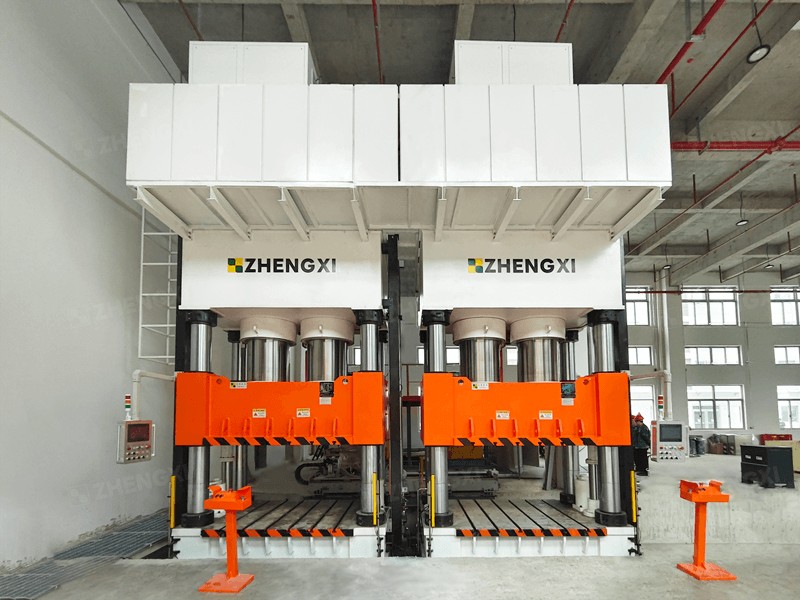
The above are the main technical specifications provided by Chengdu Zhengxi Hydraulic Press. Purchasers are reminded that to purchase the right equipment, it is crucial to understand each technical parameter in detail. For detailed parameters of various tonnages of three-beam four-column hydraulic presses, please contact our sales staff for specific parameters.
Post time: Oct-14-2025


